UN International Court of Justice without Russia
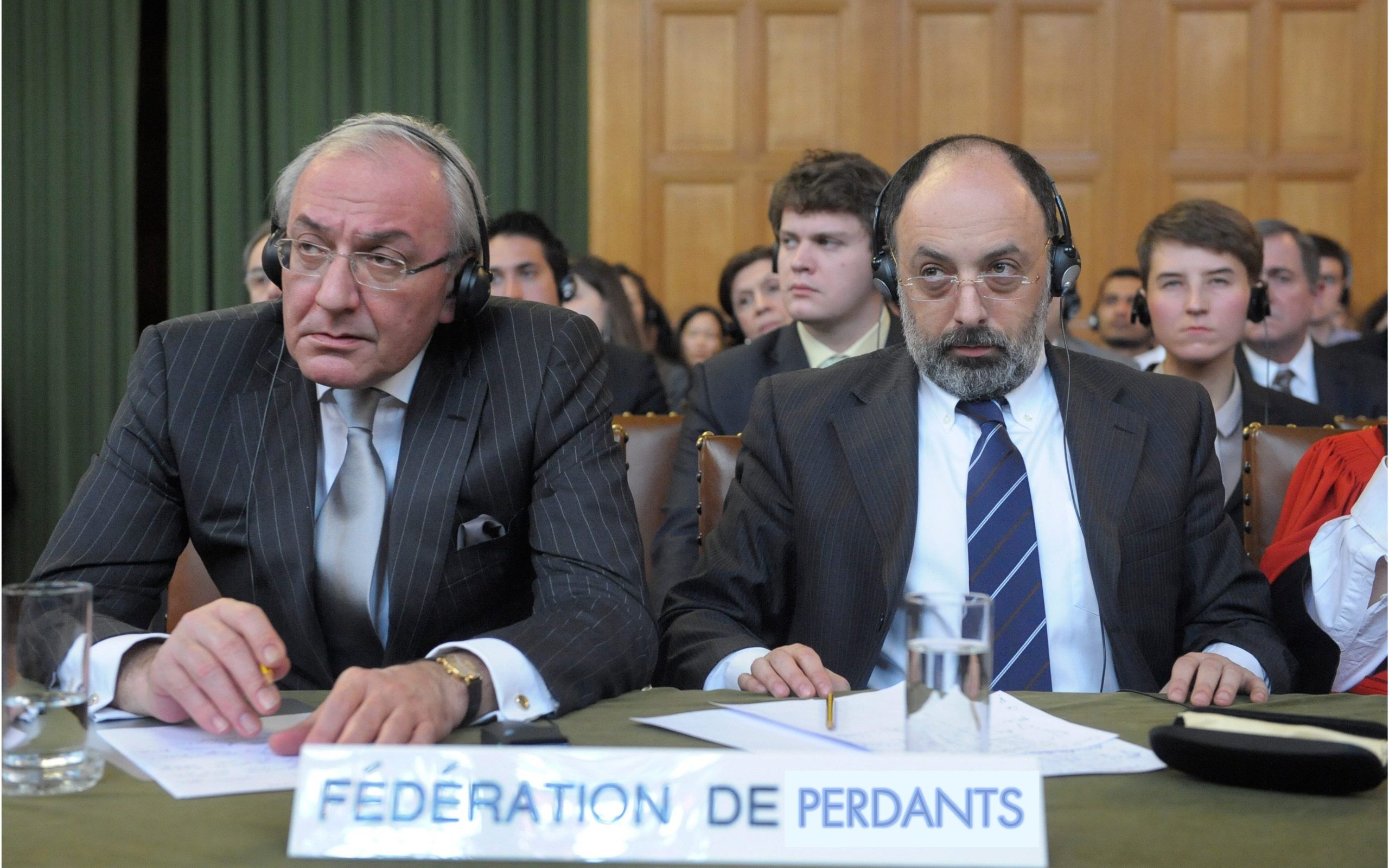
You probably already read that the International Court of Justice, for the first time in its 78-year history, will not have a judge from Russia (or the USSR), but is Russia really losing weight in the UN?
This question arose in my mind because the candidate from Russia, Kirill Gevorgyan, won as many as 77 votes at the UN General Assembly, which seems like a lot. But much of this is just the first view of a person who does not really understand how the UN works. But I figured it out a little, and yes, Russia really lost support significantly. This is evidenced by the process of nomination of judicial candidates and the voting itself.
Who don’t have the strength and desire to read my entire amateur international legal text, here is a summary:
- Judges are voted on simultaneously by two UN bodies: the General Assembly and the Security Council.
- In order to become a judge, nominees must gain a majority both there and there: in the General Assembly, it is more than 97 votes, and in the Security Council, it is more than 8.
- Gevorgyan failed in both bodies. This is even though from February 2021, he was elected vice president of the court.
- Therefore, he is packing his briefcase, and on February 6, 2024, he must return from Europe, such hated for the Russian soul, back to the swamps.
But the details of this process are almost as interesting as the summary, so I recommend reading on.
Nomination
Candidates for judges are nominated by countries. This time there were 9 candidates for 5 vacant positions of judges. Here’s who nominated whom this year:
| Vacancy | Candidates | Nominating national groups |
|---|---|---|
| Mohamed Bennouna Morocco | Chaloka Beyani Zambia | Netherlands, Zambia |
| Ahmed Amin Fathallah Egypt | Egypt | |
| Antoine Mindua DR Congo | China, DR Congo | |
| Dire Tladi South Africa | Brazil, Finland, Latvia, Mexico, Portugal, Sierra Leone, South Africa | |
| Kirill Gevorgian russian federation | Bogdan Aurescu Romania | Bulgaria, Estonia, Italy, Latvia, Netherlands, Peru, Poland, Portugal, Romania, Sweden |
| Kirill Gevorgian russian federation | Belarus, China, Russia | |
| Patrick Lipton Robinson Jamaica | Juan Manuel Gómez Robledo Mexico | Australia, Brazil, Colombia, Denmark, Finland, France, Guatemala, Mexico, Norway, Portugal, Spain, Sweden, United Kingdom, United States |
| Joan Donoghue United States | Sarah Cleveland United States | Argentina, Australia, Austria, Bahrain, Bangladesh, Brazil, Bulgaria, Cambodia, Canada, Chile, China, Colombia, Czechia, Denmark, Dominican Republic, Estonia, Finland, France, Georgia, Germany, Guatemala, Hungary, India, Ireland, Italy, Japan, Jordan, Latvia, Luxembourg, Malaysia, Malta, Mexico, Morocco, Netherlands, New Zealand, Norway, Peru, Poland, Portugal, Republic of Korea, Romania, Sierra Leone, Singapore, Slovenia, Somalia, Sweden, United Kingdom, United States |
| Hilary Charlesworth Australia | Hilary Charlesworth Australia | Argentina, Australia, Austria, Bangladesh, Brazil, Canada, China, Colombia, Denmark, Finland, France, Germany, Guatemala, India, Ireland, Italy, Japan, Latvia, Luxembourg, Malta, Mexico, Netherlands, New Zealand, Norway, Peru, Poland, Republic of Korea, Romania, Sierra Leone, Singapore, Slovenia, Sweden, United Kingdom, United States |
Voting takes place secretly, so it is not known who voted for whom. But, as you can see, it is known who nominated whom. Here you can already see how the level of support for Russia has fallen, at least compared to voting for the Russian nominee in 2014.
If now Gevorgyan was nominated by three countries (China, Belarus, and Russia), then in 2014, when he was elected for the first time, he was nominated by as many as 13 countries: Colombia, France, Greece, Japan, Morocco, Peru, the Republic of Korea, Slovakia, Great Britain, the USA , and the same China, Belarus and Russia. So, Russia lost the support of 10 countries.
By the way, then, in 2014, Russia also supported the nomination of a judge from Morocco, and Morocco, in return, supported the nomination of Russia. Now, Morocco has supported the US nomination.
Voting in the General Assembly
In order to receive the approval of the General Assembly, a candidate must not only receive a majority of votes (97), but exactly as many candidates as there are vacancies must receive a majority of votes. The assembly votes in several rounds, because there are usually more nominees than the number of vacancies, and more candidates than necessary can get a majority.
In 2014, four judges were elected. Voting took place in six rounds because six candidates received the required majority of votes in the first round. Therefore, in each subsequent round, the countries reduced the votes of some candidates until there were four of them left. But I will not describe in detail who received how many votes. The main thing is that Gevorgyan gained an average of 148 votes in each round.
This time, voting in the General Assembly took place in one round and Gevorgyan received only 77 votes, which is half of what he had nine years ago. This is the second from the end after the judge nominated by the Republic of Congo. And the second evidence of the decline of Russia’s reputation in the UN.
Voting in the Security Council
If the General Assembly decided on five candidates in one round, there were five rounds at the Security Council: first, the majority of the Security Council received 6 candidates, four more rounds were needed to weed out one candidate.
And here is the third evidence of the decline of Russia’s support at the UN: in none of the rounds, as you can see in the table, Gevorgyan did not receive more than 6 votes out of the required 8. The table also shows how the candidate from Egypt flew by, and how confidently Gevorgyan was bypassed by the judge from Romania.
| wdt_ID | Candidate | GA round | SC 1 | SC 2 | SC 3 | SC 4 | SC 5 |
|---|---|---|---|---|---|---|---|
| 1 | Bogdan-Lucian Aurescu (Romania) | 117 | 9 | 10 | 9 | 9 | 9 |
| 2 | Chaloka Beyani (Zambia) | 81 | 4 | 2 | 2 | 1 | 1 |
| 3 | Hilary Charlesworth (Australia) | 117 | 11 | 11 | 11 | 10 | 9 |
| 4 | Sarah Hull Cleveland (United States) | 135 | 14 | 14 | 13 | 13 | 12 |
| 5 | Ahmed Amin Fathalla (Egypt) | 81 | 8 | 8 | 9 | 8 | 7 |
| 6 | Kirill Gevorgian (Russian Federation) | 77 | 6 | 5 | 6 | 6 | 5 |
| 7 | Juan Manuel Gomez Robledo Verduzco (Mexico) | 143 | 14 | 13 | 14 | 14 | 13 |
| 8 | Antoine Kesia-Mbe Mindua (Democratic Republic of the Congo) | 65 | 1 | 1 | 1 | 2 | 2 |
| 9 | Dire Tladi (South Africa) | 113 | 8 | 8 | 10 | 12 | 10 |
| 10 | GA: N of candidates over 97 | 5 | |||||
| 11 | SC: N of candidates over 8 | 6 | 6 | 6 | 6 | 5 |
What it affects
Russia is a member of the UN Security Council on somewhat dubious grounds: in some diplomatic-magical way, it replaced the Soviet Union there, without being its direct successor. But there is no mechanism to exclude it from there. On this topic, I advise you to watch a recent interview of the Ambassador of Ukraine to the UN, Serhii Kyslytsa:
Despite the fact that Russia publicly declares its negligence on international law, it is obvious that if it really did not care, then Mr. Gevorgyan would not have submitted his candidacy. If it were not all the same, the Russian media would not be happy with the appointment of Gevorgyan as the vice president of the International Court of Justice in 2021. It is clear that in reality, Russia does not care whether it is represented at the UN International Court of Justice.
And now, Russia has lost one guaranteed vote against any decision that is against its interests. For example, Gevorgyan was one of those judges who voted against the order of March 16, 2022, by which the UN Court obliged Russia to stop the war against Ukraine. Will not vote again. But Russia will not stop the war from this either.
UPDATE: behind the scenes
For this material, I was really looking for some behind-the-things info and I found a person who possesses it – several acquaintances pointed out to me in one voice. This person was able to comment on the election only now (November 29, 2023). Unfortunately, I can’t say this person’s name. Well, here’s our conversation.
To what extent are the results of the judges’ elections a merit of the Ukrainian team? Can you tell me how did it work?
I have nothing to comment on the activity of the Ukrainian team, it is a common goal of Ukraine, the European Union, the US, the civilized world if you like. Of course, we shouted from every direction that a candidate from a state that brazenly does not fulfill the prescriptions of the UN Security Council has no place in this court, but the merits of the diplomatic corps of our partners cannot be underestimated.
First of all, Romania, which nominated its candidate in order to create competition with Russia.
There is no clear regional division of seats in the elections to the ICJ, it is more of a gentleman’s agreement. Theoretically, it could be that two, or even three, African candidates were elected. However, there is an understanding among most states that one of the selected candidates should represent the Eastern European group. Therefore, in the absence of competition in the group, the Russian Federation could well be elected after many rounds of voting.
I got the impression that Russia did not really fight for Gevorgyan: even at the nomination stage, only Belarus and China supported his nomination, while last time Gevorgyan’s nomination was supported by 12 countries, including the USA, Britain, and France. Is this my misconception?
Russia fought, and fought actively, but there are many nuances. Of the permanent members of the UN Security Council, only China supported Russia this time for an obvious reason: France, Britain and the USA oppose the Russian Federation together with us and together with us boycott its election to important positions. This is a direct consequence of the Russian invasion. Everyone who nominates a Russian candidate will receive a kind of brand, during secret voting it is not known who you voted for, but nominations are open, and no one wants to spoil their reputation.
I see that Gevorgyan was supported by Morocco in 2014, and Russia supported Morocco’s nomination in response. This time, Morocco supported the American candidate. Has Morocco’s policy towards Ukraine changed?
The position of Morocco in relation to Ukraine is very sensitive, as it was – and still is, but in this case, the matter is not so much in Ukraine as in the Russian Federation and the USA.
I concluded in the article that these elections indicate a very, very strong decline in Russia’s reputation (influence) in the UN. After the failure in the elections of UN judges, Russia was also excluded from the UNESCO executive board. Is this really a decline in Russia’s influence in the UN, or am I wishful thinking?
There is influence in the Russian Federation, as evidenced by the elections to the Committee on Contributions: there are many African, Asian, and Latin American countries that consider the Russian Federation to be the protector of their interests in the UN. However, there are such elections as the UN Security Council, the UNHRC. Where support for the Russian Federation automatically imposes a brand of contempt for the UN Charter, international law and common sense in principle.
We appeal to the fact that the Russian Federation, which deliberately ignores the decision of the UN ICJ, cannot be represented as a member of the Judges. That Russia’s violation of human rights in Ukraine is a reason for suspending its membership in the UNHRC, which was supported by the General Assembly. How can you re-elect Russia to the UNHRC at all?
Although all this looks like a trifle, it also looks like Russia’s failure, so it’s worth drinking. And while I drink, tell me what you think?