
The weird plenary session of the Supreme Court
On Friday, the Supreme Court held the Plenum. They considered “extremely important and topical issues, as well as issues that aroused keen interest.” But they were considering it as if they were deciding what color to repaint the wallpaper in Knyazev’s office.
So, here’s the agenda:
- on an appeal to the Verkhovna Rada regarding draft laws No. 9438 dated 29.06.2023 and No. 9438-1 dated 14.07.2023 “On Amendments to the Criminal and Criminal Procedural Codes of Ukraine regarding strengthening responsibility for corruption criminal offenses in the sphere of justice”.
- on an appeal to the Verkhovna Rada regarding draft laws dated 03.07.2023 No. 9454 and dated 11.07.2023 No. 9454-1 “On Amendments to the Law of Ukraine “On the Judiciary and the Status of Judges”” regarding the introduction of additional procedures to strengthen public trust in the judiciary.
In essence, the draft laws are a reaction to the NABU’s investigation into the former head of the Supreme Court Knyazev. The Legal Committee of the Verkhovna Rada asked the Supreme Court to provide them with an assessment.
Draft Law 9438 proposes: to add the following articles to the Criminal Code and bring them under the jurisdiction of NABU:
- Article 370-1. Offering, promising, or giving an improper advantage to a judge or jury
- Article 370-2. Acceptance of an offer, promise, or receipt of an improper advantage by a judge or jury
- Article 370-3. Influence on the adoption of a court decision by a judge, jury
- Article 370-4. Bribery of an expert, specialist
- Article 370-5. Bribery of a witness
Draft Law 9438-1 proposes to supplement Articles 368 and 369 of the Criminal Code with clauses on bribes specifically for judges and jurors. And to supplement the Criminal Code with Article 369-4 “Influence on the adoption of a court decision by a judge, jury”.
How the plenary session ran
Before I get to the point, I want to share my impression of the format of the Plenum. When I hear the words “Plenum of the Supreme Court”, I imagine two hundred caustic and inquisitive legal luminaries who together try to decide the fate of the Supreme Court after the powerful reputational blow inflicted by Knyazev. Judges probably argue and boldly put forward non-obvious arguments and counter-arguments to each other; younger judges are fascinated to observe the sky-high level at which senior judges conduct legal discussions, how they feel the spirit of the era, and their active role in the state.
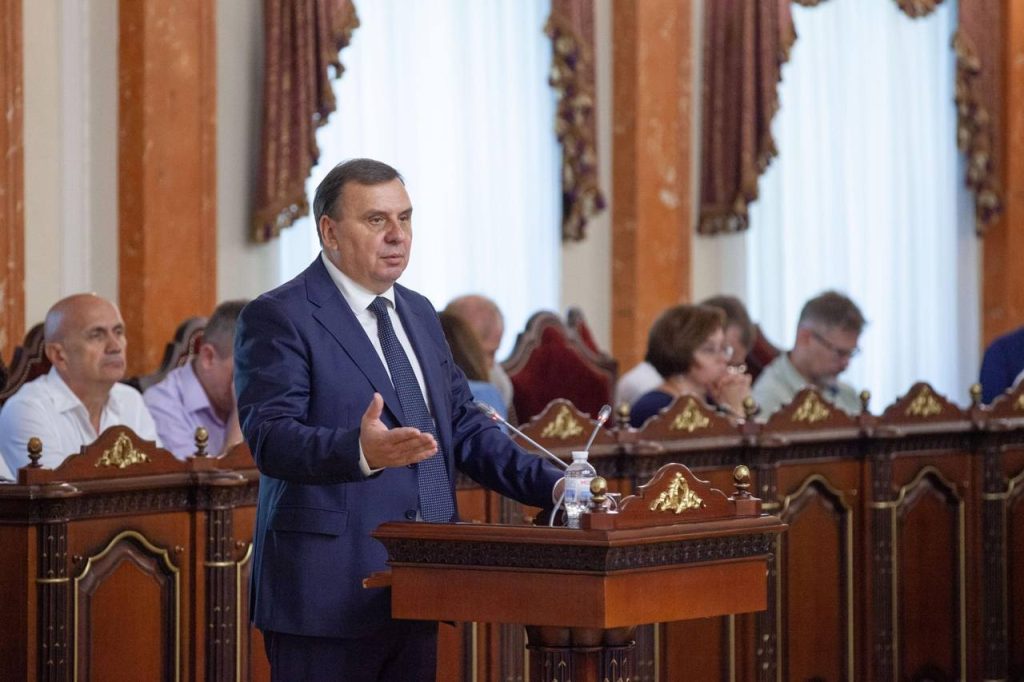
Instead, Stanislav Kravchenko read the paper without intonation and without obvious signs of lively discussion put the question to a vote. Watch his persuasive speech here from the 35-minute mark:
The judges upped and voted.
I am generally OK with such unity and unanimity of judges on issues of survival of the Supreme Court, but somehow there was little life in all this. Nevertheless:
What the Plenum has decided
The above-mentioned paper, which was read by Mr. Kravchenko, was written very well. According to the speechwriters, judges should turn to the Verkhovna Rada with a recommendation to finalize draft laws on changes to the Criminal Code, because:
- the suggestions are not systematic. They relate to the strengthening of responsibility for the corruption of judges, although there are still many other areas where corruption causes public concern, for example, in post-war reconstruction (reference was made to public opinion polls). Why is responsibility not increased in these areas as well?
- in fact, the Criminal Code already provides for responsibility for all the listed actions, which is why a competition of norms is created;
- different approaches to the differentiation of acts by gravity are used than in the existing articles;
- the draft law is a response to one single case (the Knyazev case, although it was not named directly);
- it is proposed to strengthen the responsibility for the corruption of judges, jurors, witnesses, experts, specialists, but not lawyers and prosecutors.
Draft Law 9454 proposes to give the High Council of Justice (HCJ) the authority to conduct “monitoring of the court’s work” in the event of a notification of suspicion of committing a corruption criminal offense to one of the judges of the relevant court and the adoption of a decision by the HCJ to consent to the detention, custody or arrest of such a judge or their temporary suspension.
The monitoring procedure will be adopted by the HCJ.
It may include:
- monitoring the way of life of judges;
- carrying out a full verification of declarations;
- making requests to check the proper performance of their duties by judges and to establish the presence or absence of signs of disciplinary offenses committed by them;
- survey using a polygraph;
- summoning judges and employees of the court apparatus to the HCJ to provide explanations;
- collection of information from anyone regarding committing disciplinary offenses by judges.
The alternative draft law proposes the same thing in the case of suspicion of one of the judges in committing a crime against the foundations of national security.
The Plenum of the Supreme Court came to the conclusion (115 judges “for”, one “against”) that the draft laws should not be adopted in this form because:
- they encroach on the independence of the judiciary;
- in fact, they introduce collective responsibility of judges (one is suspected – they check all of them);
- judges already submit property declarations, declarations of family connections and integrity, that is, these tools are enough for this;
- the actual investigation in criminal proceedings against a judge, which is the basis for monitoring, is a more effective tool for detecting violations by judges;
- it is proposed to start monitoring the Supreme Court no later than 14 days after the law enters into force, but this is too soon for the Supreme Court to approve a quality procedure for such monitoring;
- the HCJ will have the authority to conduct monitoring, and it will determine its procedure;
- monitoring can be used as a tool for intervention in specific cases, and revenge against judges. It is necessary to limit the opportunity to ask judges and staff of the apparatus questions about current cases under consideration and to use the procedure as a tool of pressure in these cases;
- there are no terms that will determine the time limits of monitoring, they are proposed to be set – 2 months;
- separately, they went over the idea of conducting a survey with the help of a polygraph. It was mentioned that this could lead to a violation of the presumption of innocence, such that it violates the dignity of treatment, and excessive interference in personal life. In addition, the technique does not have sufficient scientific justification. It was mentioned that the US Congress passed the Employee Polygraph Protection Act, and about the case of Doug Williams, who was convicted for giving advice on how to cheat the polygraph. And in Austria, Germany, and Australia, the use of the polygraph is prohibited.
It is interesting that the Supreme Court previously stated on its page: “The Supreme Court supports the need to implement steps that will help restore trust in the justice system and accelerate Ukraine’s European integration.” It was, among other things, about the polygraph examination of judges. But this statement on the website was not agreed with the judges of the Supreme Court.
But that’s not all
The judges of the Commercial Court of Cassation proposed to adopt one more resolution, recommending to judges of the Supreme Court, who have not yet done so, to submit property declarations within a two-month period. Before it becomes mandatory again by law. This point was agreed by the Plenum. But the next one was not.
The judges proposed to initiate the verification of declarations of integrity of the Supreme Court judges by the High Qualification Commission of the Judges. This proposal was rejected by the Plenum – 15 judges voted “for”, 89 – “against”, the rest did not vote. Arguments that were voiced against – the initiation of inspections by the Plenum is not provided for by law, and the basis for the inspection should be information about some violation of the judge.
It was decided that the next Plenum will be held in mid-late September. It will create/update working groups on the development/reform of the work of the court/courts. At the same time, they decided to discuss one of the initiatives proposed at the Plenum – the creation of the position of “professional critic” who will take care of the issue of openness and transparency of the court’s activities but within the limits of judicial ethics.
