The formation of approaches to the development of the basic criteria of the activity strategy through the prism
After the shame of the detention of Vsevolod Knyazev, the days of the judges of the Supreme Court are filled with painstaking work in strict accordance with the current legislation. “Daily painstaking work” sounds both in the public communication of the Supreme Council and on its sidelines. We understand that pretending that nothing is happening is also a strategy. But we have a better one.
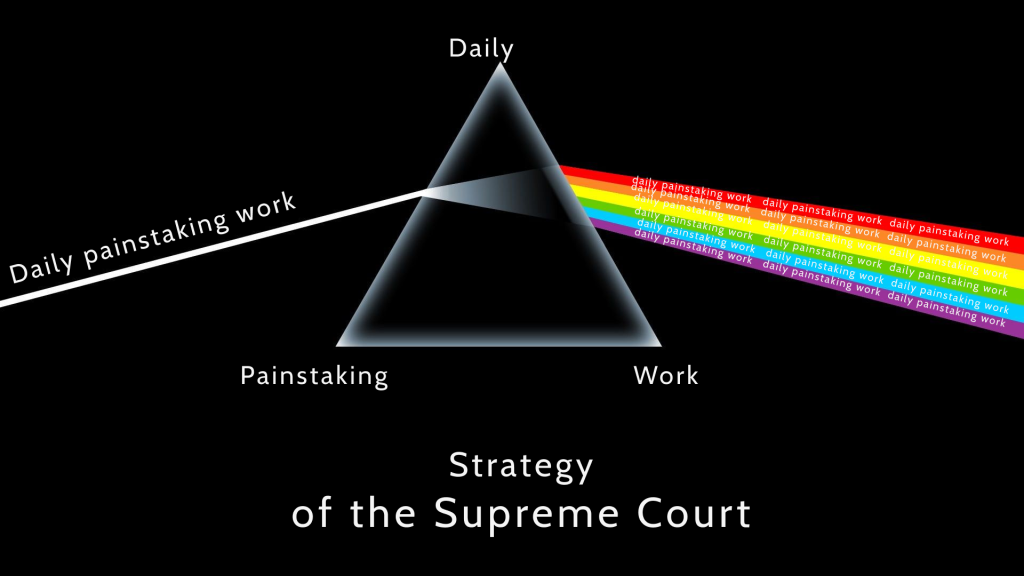
After the well-known plenum on the removal of the former chairman Vsevolod Knyazev, the Supreme Court maintains Olympic calm regarding almost all events in the judicial system.
Draft laws on the verification of Supreme Court judges, a letter from the White House with a list of reforms, a meeting of activists with G7 ambassadors, the detention of a regular judge of a regular district court for alleged bribery, a 600% workload for the judges of the Pechersky Court, the final formula for electing judges of the Constitutional Court, the Twitter skank hunting, all these and other events are nothing compared to the eternity in which the Supreme Court resides.
We do not believe that the court should react to all events taking place in a highly saturated information field, but it should record its own subjectivity in the conditions of the most severe crisis during the entire existence of the Court.
This requires a strategy. It is as necessary as breathing for the Supreme Court and the judicial system as a whole.
Since three lawyers worked on this document (Doctor, Candidate of Laws, and just a lawyer – it’s easy to guess which of these three actually drafted this text), let’s start with a non-obvious question – why does the Court need a strategy at all?
Hope is not a strategy
It is unlikely that you will find a single and comprehensive definition of the concept of strategy anywhere. For the purposes of this article, my colleagues and I understand strategy as follows: we have an as-it state, we have a future we want to be in, and we have resources we can spend on that path. What should unite all this and ultimately lead us to the goal is the strategy.
It’s very easy to fall into a mental trap here because it seems like the strategy is simple: just make money if you’re a company, just score goals if you’re a soccer team, or just shoot well if you’re an army. No, the strategy is a bit more complicated.
You may have heard of the Greeks defeating the much larger army of Emperor Xerxes (does it remind you of anything?). They did it this way: the Greeks had fewer ships, and these ships were smaller than the Persian triremes. So they lured the Persian fleet into a narrow place surrounded by rocks so that the triremes could not maneuver and began to ram them with their small vessels. This is one of thousands of examples of strategy.
But usually, the military and respectable CEOs with MBAs talk about strategy. The court does not fight with anyone, and does not compete with anyone, so why should it have a strategy? Or can the court have another strategy beyond “daily painstaking work”?
Not only logic tells us what it can be (and must be), but also numerous examples of colleagues from other judicial systems and supreme courts.
Peter Kiefer, a judge with 40 years of experience in the courts of Oregon, Arizona, and California, in his book “The Role of Strategic Planning and Strategic Management in the Courts” says that in the absence of strategic planning, court management can be reduced to solving a billion current administrative tasks and, sometimes, crisis situations. In this process, it is difficult for the leaders of the judicial system to find time to take a step aside and see where the Court is in the system of government agencies and where exactly it is headed.
For the past three years, Olena Kibenko and the working group headed by her have been taking care of the strategy of the Supreme Court. They have sifted through the strategies of the supreme courts and judicial systems of the United States, Great Britain, Ireland, and many other countries and adapted their experience to our local context. The result was a complex document with a length of 39 pages, which no one (except the stuffy) will read (there will be a link to it at the very end of the text).
This article is an executive summary of this long and complex document.
But before that, here is a critical clarification (even three). First, we are in the triangle “power – society – court”, which we will now briefly state. Secondly, the judiciary is still trying to prove to itself and others that it has its own subjectivity, opinion, and position. Thirdly, Ivan just loves brackets, so there are a lot of them (and there will be more).
The authorities no longer write letters to judges (as well as to Colonel Aureliano Buendia), but they are not in a hurry to issue “friendly” hugs either. At some point, every election campaign must include a set of theses about “actual (this time for sure) reform of the judicial system”, but when it ends, everyday pragmatic life begins, where the authorities seek to control everything. The picture, when an employee of the President’s office, sitting in the center of the presidium between the head of the Supreme Court and the head of the Supreme Court, a little tiredly and condescendingly admonishes powerful leaders, clearly demonstrates how the authorities perceive the judicial system, and vice versa. Admonishes greatly.
We are far from demonizing or, on the contrary, adding excessive emotion to the authorities’ actions. We understand very well that the goal of every political force that gains power is control. The world stands on this. “State policy”, “state interests”, “working as a single team” – these simple and understandable narratives are offered to the judicial system by each new generation of politicians. In the Ukrainian context, this is essentially the inertia of the Soviet Union (or – more broadly – any authoritarian system), where judges are perceived as part of the official bureaucratic apparatus, the purpose and meaning of which is to embody the ideas and concepts of the political force that is currently in power.
In this context, a weak and vulnerable judicial system (such as it is now) completely suits the authorities, which use a wide range of tools – from the budget process to loud political statements, to remind who is in charge constantly. Once again, this is a sign of any government, and it is naive to hope for something fundamentally different.
But, for example, at the recent event dedicated to the 5th anniversary of the High Anti-Corruption Court, the employees of the President’s office were not invited. And those representatives of the authorities who were still there were extremely restrained in their statements and, moreover – complimentary. And there was simply no Presidium there.
Society (wants new people who will solve everything)
It’s easier with society. Since the judicial system exists in order to provide people with simple and convenient services (“the court is a service, not power” – a complex worldview discussion whose time has not yet come), this is the only and main criterion for the work of the judicial system. Simplicity and convenience.
People are actually completely uninterested in the problems of the judicial system, and they are even less interested in which judges are good, how many court decisions they make, and in what difficult conditions they work. Life, in general, is complicated, and the profession of a judge is fundamentally no different from others.
At the moment, society definitely does not have the feeling that things are moving forward and upward in the judicial system, which is why the ratings, despite all the titanic efforts and painstaking work, do not want to grow (who doubts this – let them raise the figures of public trust in the High Anti-Corruption Court – here, for example. In short, only international experts were selected for the HACC judges; there were almost no comments on the competition itself, as, in fact, on the work of the HACC from Ukrainian and international experts, and the trust figures do not demonstrate this at all.
What to do? – knows the most active part of the society – activists.
The idea of positive changes in the judicial system from them is simple, straightforward, and popular – (simply) it is necessary to recruit new, professional, virtuous (in short – ideal people) into the judicial system, who will make only fair decisions. An important clarification appears here, which significantly complicates the communication of activists with judges – activists, in principle, understand what decisions these new ideal people are responsible for, and if there is no coincidence here (for example – the very HACC), the activists’ conclusion is unequivocal – we need others, even better.
Despite some sarcasm, we have to admit that this is a good and, most importantly, simple idea, which has only one significant drawback – it does not guarantee anything by itself. It is simply impossible not to agree with holding fair competitions and creating conditions for the best to go to work in the judicial system. But this idea, if it is applied out of context, is a bit reminiscent of the “guys from the trenches will come back and restore order” narrative.
No matter how the leaders of public organizations in the field of justice now distance themselves from Vsevolod Knyazev, repeating as a mantra that they did not give him a positive conclusion (which is true), everyone still remembers how they literally carried him in their arms after, for example, issuing an order on the release of Bohdan Lvov. We quickly find a common language with activists, but they must admit that the concept of “good people vs. bad people” is too simplistic, and the world is much more complex.
In fact, if you analyze the concept of “nice people”, its basis is simple. In developed democracies, the main safeguard against corruption is that judges are society’s elite. At the same time, it cannot be said that they stand out in any way in terms of salary or social package (as always, you can earn more in private business), but the level of acceptance and public respect is incredible. Elitism is a self-sufficient thing.
However, elitism requires freedom and independence. Without independence, even the best judge in the world will make bad decisions. The court is a complex intellectual process that requires the analysis of a huge amount of information, the reconciliation of contradictory positions that have a legal and logical basis, up to the most complex cases, where the principles of law collide and where the extremely trivial concept of “deciding according to the law” loses all meaning. Therefore, even the best people, if they are not guaranteed freedom of decision-making, simply will not be able to work (or rather, they will not want to).
We (want to implement a strategy based on independence)
Society wants an adequate and understandable service and is not very concerned about how exactly this result will be achieved. An active part of society is sure that it is enough to recruit honest and professional judges (but their decisions should be carefully followed, and if the decisions do not coincide with the positions expressed on social networks Facebook and Twitter, there is obviously a problem).
The government convinces society that the judicial reforms of its predecessors were not successful, which means that it is necessary to start from the beginning, and for this, it is necessary to control the process (because these “damned” predecessors are constantly spinning somewhere nearby). In any case, both the expectations of activists and the propensity of the authorities to control affect the main asset of judges, the thing that makes the entire judicial system exist at all and the only thing that allows it to move in an independently chosen direction – independence.
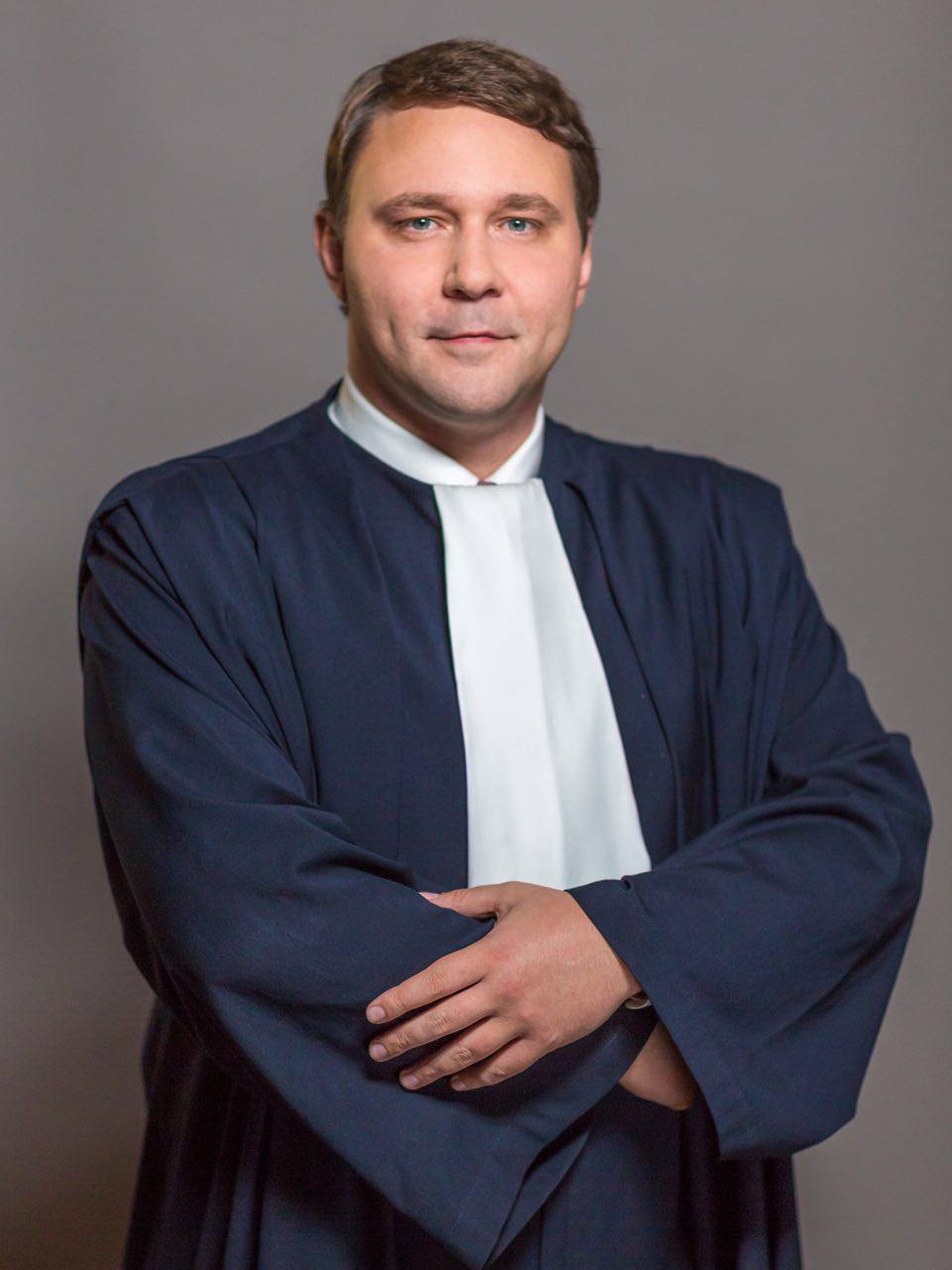
Therefore, our strategy, if you boil it down to the three most important things, sounds like this: Independence. Digital technologies. Quality of court decisions.

Independence (base, basis, foundation)
Everything is both simple and difficult with independence because it is like love. And without love, there is nothing to do in this world, as everyone knows.
It is obvious that a court without independence is not a court (because the basic principles of justice are lost), and this is an axiom. In the absence of independence, any decision will result from a bad compromise and, most likely, will not solve the problem, but on the contrary, will create additional ones.
There is one difficulty with independence – it is the internal state of each specific judge and the institution as a whole, which cannot be objectively measured. It is either there or it is not. It is impossible to be independent by half or by 37%. There are many concrete measures, but everything must begin with the awareness and desire to achieve this independence.
In order not to increase the level of pathos and not to turn to clericalisms and appeals, on which current strategies in the judicial system (for example, this one) are basically written, it is necessary to understand at the expense of which instruments the independence can be achieved, retained and expanded to the borders of 1991.
In our opinion, these instruments are the quality of writing judicial decisions and IT tools.
This, in fact, is what it all boils down to. And here’s why.
Court decisions
We are sure that all the available intellectual resources of both the Supreme Court and the judicial system should be directed to implementing a specific task – constantly improving the skills of writing court decisions. For some reason, it is assumed by default that the diaper judge has the skills to express his own opinion in the motivational part.
But there is a simple and clear reason why the texts of court decisions are of general interest to few people. The algorithm for consideration of disputes in courts is perceived by the majority of its participants as a movement towards the resolution part, which is perceived as the most important. Our foreign colleagues are very surprised by this when we tell them exactly how decisions are made in Ukraine. “You mean, the three of you in a conference room resolve a dispute in 10 minutes? And only then write the project? Is that possible?”
The surprise of colleagues can be explained simply: if the resolution part is the main thing, then the motivational part must “adjust” to it; it will have to be “written out”.
This is precisely where a serious discussion and change of emphasis is needed. The motivating part should come first, and the decisive part should be its unconditional consequence and not vice versa.
The focus on the resolution part has other, less noticeable disadvantages. Judges are not used to publicly expressing their opinions. To some extent, this is explained by the fact that the judge often feels not as a creator of law and an artist who skillfully resolves conflicts but as an official who, hiding behind cumbersome quotations from laws, intuitively looks for the right answer in a specific dispute, relying not on the impeccable logic motivational part, and on what, in his opinion, the resolution should be. In this situation, the invisible heroes of the judicial system come to the fore, the actual creators of the texts of court decisions (in many cases) – assistants. In the classic “judge-assistant” tandem, the task of the first is to decide on the decisive part, and the second has to find the justification and write the motivational part.
Judicial skill in writing motivation parts has improved since the creation of the Supreme Court (as judges began to write decisions with assistants), but this is only the first small step in a very long way. Court decisions are still difficult to read; they are not user-friendly and are saturated with citations from laws that are not very clear on how and why they are mentioned in the text. This is a road to nowhere. The motivation part is the main thing in the court decision. Sentence by sentence, thought by thought, it forms a logical and internally consistent picture, which definitely leads to just such a decisive part. Law is mathematics, not a school essay on literature based on a work you haven’t read. Reading a judgment should be a pleasure, not a pain.
A colossal workload in the form of hundreds of cases (Pechersk court – 600%) simply does not leave time for writing adequate court decisions – this is what any judge will tell you (and we, too). But what judges should realize – in fact, the skill of writing a court decision saves time, not increases it. When an assistant writes a 20-page text, 18 of which are citations of legislation and decisions of the ECtHR, which wander from resolution to resolution, it is like preparing a dish that consists of 90% sauce and 10% food.
As soon as the problem of decisions with poorly written texts is solved, it will immediately become clear that the total one hundred percent unity of judicial practice is a mirage that cannot be achieved and, in fact, is not necessary. Court decisions cannot be the same because, for this, the disputes must be the same, and this is fundamentally impossible – all people are different, and so are their life situations and conflicts. Total unity of judicial practice does not exist and cannot exist. Those who use this thesis as a criticism of the judicial system are right in only one thing – judges rarely manage to successfully explain in the text how this case differs from hundreds of others, why the circumstances here developed in this way, and so on.
Technology
In the courts, computers, local networks, databases, and a bunch of office management programs are in every office, and finally, a module of the electronic court should start to work, but in principle, this does not make it easier for anyone. What you will definitely find in every court is tons of paper; every, literally, every piece of paper is printed, sometimes several times. Greta Thunberg should see it! Obviously, working with papers in the 21st century is a complete delusion. This greatly complicates the process, making it longer and more difficult, and as a result, the economy loses millions of dollars due to the extremely low rate of adoption of digital technologies. Once again, legal proceedings due to the principle of “everything on paper” are long and very inconvenient.
The court should become synonymous with the word “technology”. Courts and judges should daily use programs that work professionally with texts and will be able to structure judicial practice. Most disputes should be resolved on the principle of online platforms (Amazon) and not go to court at all (only when it is a real dispute). A very similar concept is currently being implemented in the UK, where, with wigs and court procedures unchanged since the 16th century, there will soon be one of the best online systems in the world (here’s a link to the general page, but it’s easy to understand).
Again, technology makes the court process faster and more convenient (here, the court is really a real service), and the burden on the budget will be less.
Bombastic conclusions
Let’s relax a little and add bombast to this complex text. We proved and continue to prove to the whole world how we got rid of the inferiority complex forever. We sincerely believe that Ukraine is capable not only of taking a well-deserved place in the European Union but also of giving it a new impetus for development, including in the judicial system. In short, we are optimistic. But also pragmatists; that’s why we have to think about how to achieve all that we were thinking about here. In other words, we think about strategy.