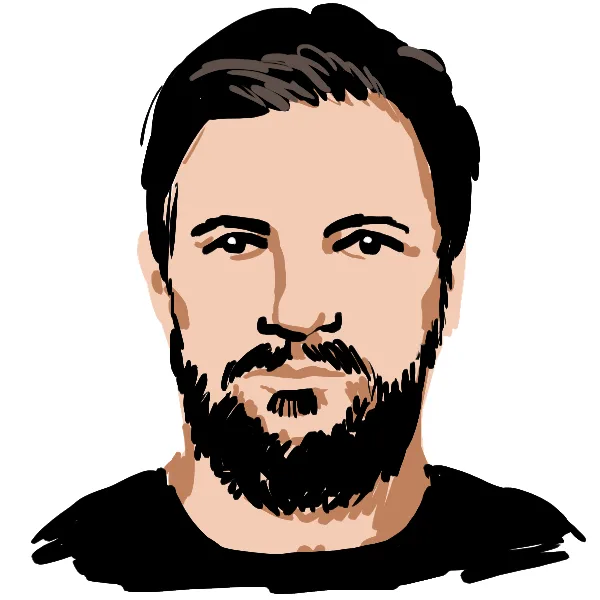
The First Hearing in the Oleksandr Butyagin Extradition Case
I have taken a closer look at the extradition proceedings involving Oleksandr Butyagin, an archaeologist affiliated with the Hermitage Museum. This seems timely: Russia is steadily opening the propaganda taps around the case.
Yesterday the Warsaw District Court began hearing the merits of Ukraine’s extradition request. The defence outlined three main arguments.
- First, the offence of conducting archaeological excavations without a permit does not carry a custodial sentence under Ukraine’s Criminal Code.
- Second, the defence disputes the prosecution’s assessment of the damage caused.
- Third, extradition to Ukraine would allegedly pose a risk to Mr Butyagin’s life.
Mr Butyagin is represented by Adam Domanski, a partner at the Polish law firm Kondracki Celej. We published a short note yesterday on who is footing the bill for the legal defence.

For now, however, the defence strategy appears to be delay and it is working. Counsel first sought an adjournment on the grounds that he had not had time to review all the case materials. He then filed a motion to recuse the judge.
It is too early to assess the first substantive argument. Part 1 of Article 298 of Ukraine’s Criminal Code does indeed provide no prison sentence. But Parts 3 and 4 may well apply. The site of Mirmekiy, where Mr Butyagin conducted excavations, is a monument of national significance. In such cases, imprisonment is предусмотрено by the statute.
I will reserve judgement until the documents surface and the factual matrix becomes clearer. In the meantime, I looked at what leading scholars of international humanitarian law say about archaeological work on occupied territory.
Their view is unanimous: excavations on occupied territory are unlawful. I have not found a single serious work in the past 20 years arguing the contrary. If such works exist, I would be grateful to see them.
Patty Gerstenblith, DePaul University College of Law:
“Archaeological excavation is an invasive activity that alters a cultural heritage site and therefore cannot be regarded as neutral preservation. On occupied territory, such actions require the consent of the sovereign state.”
Roger O’Keefe, Bocconi University:
“The occupying power does not acquire sovereignty over occupied territory. It exercises only factual authority, tightly constrained, including by the duty to respect and protect cultural heritage.”
Ana Filipa Vrdoljak, University of Technology Sydney:
“Actions affecting cultural heritage in occupied territory interfere with the cultural identity and the right to self-determination of the affected population.”
Even scholars outside the legal field reach the same conclusion.
Lynn Meskell, University of Pennsylvania:
“Archaeology under occupation often becomes a technology of governance, serving to legitimise territorial claims rather than to preserve the past.”
(“States of Conservation: Protection, Politics, and Pacting within UNESCO’s World Heritage Committee”, Anthropological Quarterly 87.)
Most strikingly, even Russian academics agree that excavations in occupied territory and, especially, the removal of artefacts to the occupying state are at the very least unethical.
Dmytro Dubrovsky, a former lecturer at the Higher School of Economics, sociologist and historian, puts it bluntly: from an ethical perspective, excavations in Crimea after 2014 were possible only with Ukraine’s consent; after 2022 they were simply impossible. He adds that he has known Mr Butyagin for a long time and that, regrettably, Mr Butyagin has long disagreed with this position.
Or consider Pavel Kolosnitsyn, a former researcher at Novgorod University’s Centre for Archaeological Studies: “No one is outside politics. Everyone makes a choice. Every choice has consequences. I made mine. I now live in Armenia and can no longer study the Novgorod sites to which I devoted 20 years of my life.”
Mr Butyagin was aware that criminal proceedings had been opened against him in Ukraine. He nevertheless continued to tour Europe giving lectures.
The final brushstroke in the portrait is his reaction to his detention: “Apparently, Ukrainian prosecutors have nothing better to do during a war.”
Yesterday the court adjourned to consider the recusal motion. The date of the next hearing has yet to be announced.