The First Integrity Council: Serhiy Verlanov Reflects
I saw the Public Integrity Council as a purely transitional model. A temporary institution. Its members were supposed to gain valuable experience and then either become members of the High Qualification Commission of Judges themselves, or help select them. That did not happen, unfortunately.
Dima: We need to go back quite a few years. To do it properly, let’s start with what you were doing in 2015–2016.
Serhii: In the summer of 2015 I moved from PwC to a partner position at Sayenko Kharenko. I did tax work, but my roots are in tax litigation. I had been doing that since 2002. Tax and administrative disputes were my main specialization.
D: You joined PwC as a junior and worked your way up to senior manager?
S: I joined as a consultant in 2008 and by 2015 I had made it to Senior Manager, yes.
D: Senior manager in the Big Four is a solid role. Getting it in seven years is a very good pace. Why did you decide to leave PwC?
S: I did not want to leave PwC, I actually liked everything there. But Sayenko Kharenko made a very good offer and I decided to challenge myself. The first year was quite hard and uncomfortable, I had to get used to life outside the Big Four.
Plus, in the Big Four it is almost impossible to have any serious non billable workload, and after the Revolution of Dignity I wanted to contribute to reforms somehow. But that was not the main driver in 2015.
D: Before we get to reform, let’s talk a bit more about the Big Four and law firms. Can you compare PwC and Sayenko Kharenko by some other criteria besides non client work: management style, pace of work, types of clients, maybe something else?
S: In fact, there is a big difference. The smallest difference was actually in clients, because Sayenko Kharenko also focuses on international business, so that part of the work felt similar.
Management in the Big Four is very regulated: procedures, career path, metrics. Back then, almost all of the management at PwC were foreigners, so mentally it felt like working abroad.
Plus the Big Four trained you to be a holistic person. You had to do a lot of marketing, articles, trainings, social projects. That grew you into a manager and later into a partner. The skill set was broad.
D: So PwC is bureaucracy, and Sayenko Kharenko is, as Riabokon would say, a company of advanced capitalism?
S: PwC is definitely capitalist bureaucracy, in a good sense of the word. And Sayenko Kharenko is a leading Ukrainian firm, but with a strong Anglo Saxon cultural influence: meritocracy, intellect. And of course profit.
In good times there are some notes of socialism in the Big Four, but once a crisis hits, people are laid off in batches without hesitation.
D: You joined in a crisis and, you could say, left in a crisis.
S: Well, 2015 was already a good year. 2014 was turbulent. Just to be clear for the text version: I liked everything at PwC, it was a defining management school for me. I learned law at university and then in the courts, of course. But management I learned at PwC.
D: So you move to a top law firm, and that seriously changes your life. Why did you start thinking at all about reform? What were you missing? Did you grow tired of legal work as such, or was it a different kind of pull?
S: I worked like crazy at Sayenko Kharenko for about a year, results started to come in, I hired a few good people into the team and got some breathing room. And sometime in the summer of 2016 I saw that the reforms were starting to stall, and I felt an inner need to personally help push this bus forward.
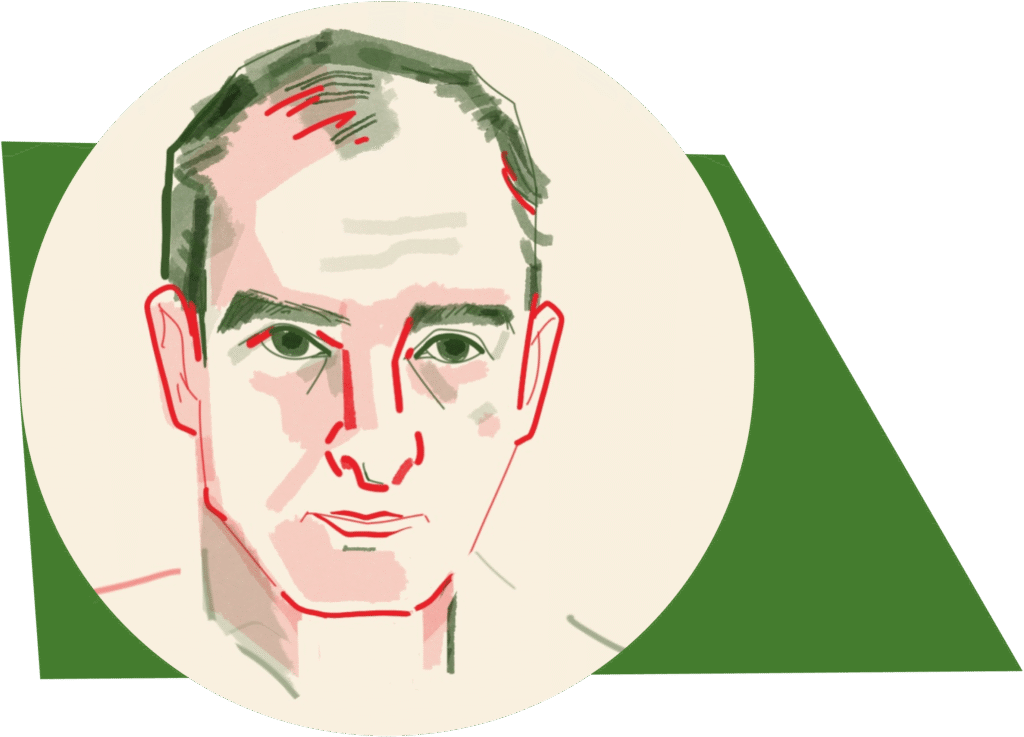
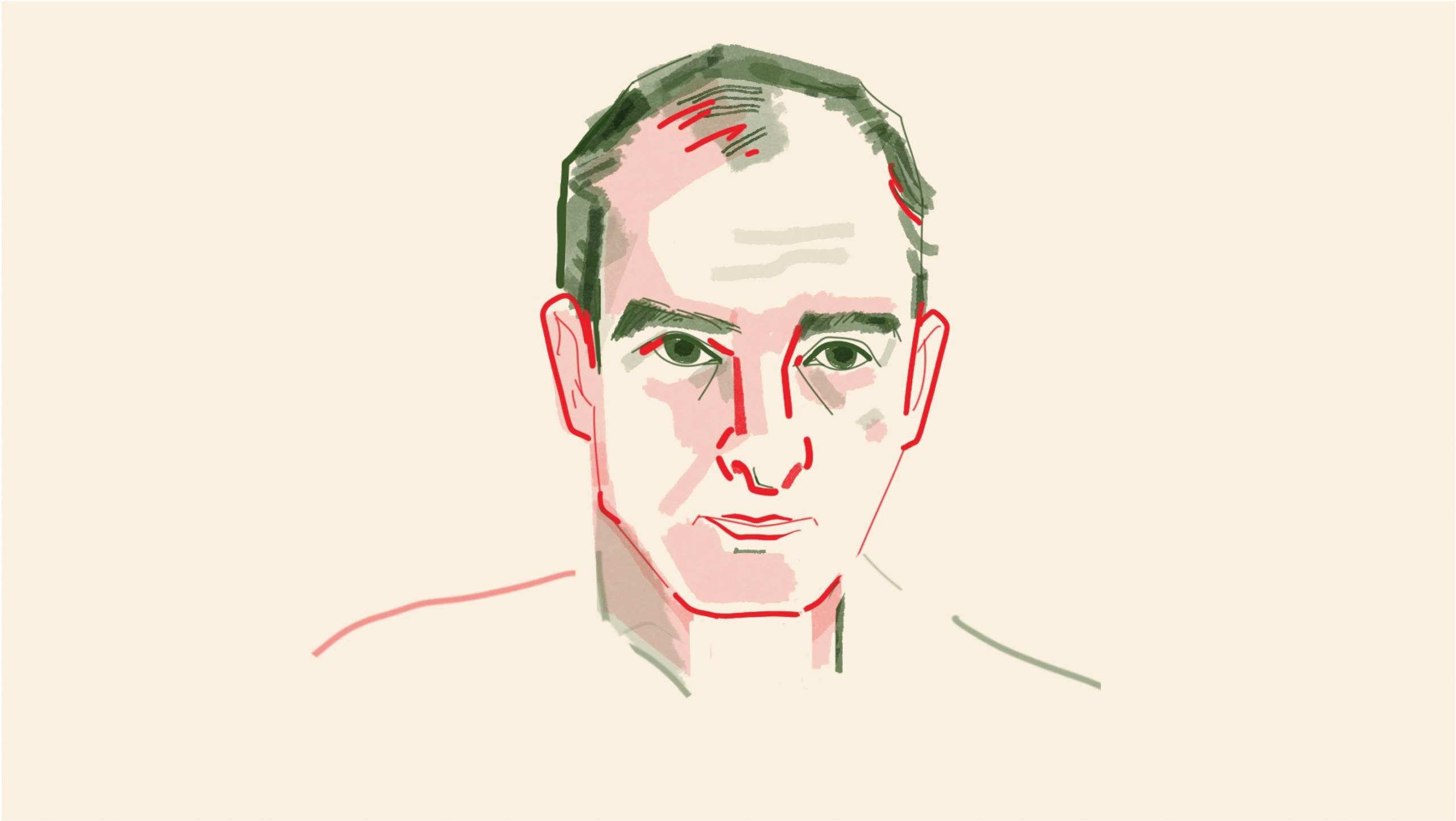
Serhii Verlanov is a Ukrainian lawyer, PhD in law and an active member of the legal community. He spent most of his career at PricewaterhouseCoopers, where he handled tax disputes. In 2015 he moved to Sayenko Kharenko as a partner.
In 2016 he joined the newly created Public Integrity Council. Later he became Deputy Minister of Finance of Ukraine under Oksana Markarova, and in 2019, after a competitive selection, he became head of the State Tax Service of Ukraine.
At the end of April 2020 the government suddenly dismissed him and Maksym Nefiodov, who headed the State Customs Service. In early May the Security Service of Ukraine searched Serhii’s home (we did a short interview with him immediately after that search).
A few months later Serhii and his family moved to Germany. There he was admitted to the bar and now practices at Rechtsanwaltskanzlei Lewinski.
Public Integrity Council
Ivan: After the Revolution of Dignity, society had a huge demand for reforms, especially in the judiciary. Why do you think courts became such a clear priority?
S: All my professional life I worked in courts, and later I started talking to judges at different events. I felt I could actually do something.
And there was one interesting episode, right when I started at Sayenko Kharenko. Autumn 2015. November, exactly ten years ago. I was going to Odesa for a forum, maybe a judicial one. I gave a talk there, I do not remember the exact topic, but the idea was: how courts can start hearing feedback from the professional legal community.
I did not leave the legal community indifferent, and I think on that topic I ended up “on the radar” of the Association of Lawyers of Ukraine.
D: How did the civil servant inside you start to form? I understand that after 2014 many lawyers had this urge to do something for the state. How did it happen in your case?
S: I guess in the same way as for many others. There was a feeling that you could change something with your own hands and be heard. A window of opportunity.
D: Was it the Association of Lawyers that invited you to join the Public Integrity Council?
S: Yes. Here comes a small scoop for the podcast: at that time I was actually thinking of applying for a judicial competition in the administrative courts. But I was not fully sure yet. And this PIC proposal resonated with me.
D: How did the Public Integrity Council start? What did it look like from the inside?
S: Like a revolutionary headquarters. The first couple of meetings were all about slogans, calls to action and motivational speeches. And then we had to sit down and work.
D: I do not know about Ivan, but for me this is the most interesting part. How did you manage to work together? A completely new body, people as different as possible. You were united by the desire to change something, but probably divided by the fact that almost no one had experience working in such boards. To me, PIC looks a bit like a corporate board. Is that a fair analogy?
S: Very different people, very different backgrounds. I hardly knew any civil society activists, the whole movement was just emerging. And I had always lived in a professional paradigm: clients, business, KPI.
Some members were seasoned advocates, some had worked with the High Council of Justice before, on that first lustration commission for judges of the Maidan cases, if I remember correctly. And there were the two of us from the Association of Lawyers, Savchuk and I, both attorneys. We also had strong journalists. It was actually a good team.
Total institutional uncertainty also added a lot of activity. And everyone had a different idea of how much time to put in. From a few hours a week to almost full time with sleeping on a sofa in the office.
The first opinions, the first interviews. Before that it was very turbulent. And responsibility brings people together.
D: Can you name some basic principles, values, ethical rules that a) everyone agreed on and b) everyone actually followed? And which principles did not take root in the first composition of the PIC?
S: It has been a long time, but let me try. On the judges of the Maidan cases, there was a clear understanding of what was beyond the pale, and everyone stuck to that. We also voted by majority, and that was enough as a basic democratic principle.
What did not take root I do not remember so clearly. The conservative professional part of the Council was of course shocked by direct action campaigns, but now that already seems part of the normal toolkit. People had very different levels of tolerance for conflict. But in substance, I think we were about 80 percent coherent.
D: How did you define who counted as a “judge of the Maidan”?
S: Those who took away driving licenses for going to the protests, and cases where people were sent to pretrial detention. There were also bans on demonstrations, those were administrative cases.
D: Were there cases related to the Maidan that did not lead to someone getting the label “judge of the Maidan”?
S: I cannot tell you now. There were more than 600 files. Maybe more.
D: Would you have found a judge not to be of “integrity” if in February 2014 he or she had struck down a decision by some city council on “the social and political situation in the country”?
S: That is a theoretical question for one former member of the PIC. We would look at the reasoning and the consequences first of all. If the decision was adopted by two deputies out of a hundred, then no. Let me put it this way: if I were the rapporteur, I would not propose a negative opinion in such a case.
D: It is a very practical question, actually. I am talking about Mykhailo Zhernakov and his ruling. I am curious whether in 2015 you discussed these things and what standard you were setting for judges back then.
S: Of course we had such discussions. We took the Bangalore Principles of Judicial Conduct as our basis, plus the values that brought people out onto the streets in 2014, in 2004 and back during “Ukraine without Kuchma”.
The older PIC members, for example, proposed to automatically find all former CPSU members lacking integrity. Then there was growing demand for meetings with “patriarchs of integrity”, the people who embodied these virtues. We met with Cardinal Husar, for instance.
D: How did the very idea of “integrity” appear, and what exactly did you put into it at the time?
S: It first appeared in the law. We just moved further and developed the doctrine. But the concept itself is at the intersection of morality, law, ethics, professional ethics, humanity, values. So it is not a simple task, and it has already been living for about ten years.
D: Do you think the meaning of “integrity” has changed over these ten years?
S: At some point we tried to summarize and systematize the practice as “case law”. I had written my PhD thesis on social human rights under Professor Rabinovych. I passed the idea to Halia Chyzhyk. She did a great job and produced a general overview of the PIC practice.
Competitions
I: In your view, did a proper dialogue form between the PIC and the judiciary? Do you think the communication model was too aggressive, too black and white, and that is why it still lives on in this form?
S: I would say the dialogue did not really form. It was mostly conflict mode, I agree. That did not appeal to me. In a constructive mode you can achieve more. But different stakeholders had different goals and tasks. In our conditions, I think this can be managed by time limits.
And another thing. I saw the PIC as a purely transitional model. A temporary institution. Its members were supposed to gain valuable experience and then either become members of the High Qualification Commission of Judges, or help select HQCJ members. To institutionalize good practices in that way.
But that did not happen, sadly. Only Roman Maselko made it into the High Council of Justice.
I: Roughly speaking, these are two very different models: not letting people in vs choosing the best. Do you see it that way?
S: All processes become formalized, especially over time. It is always easier to analyze information than to evaluate it in a broader sense. That is why the focus shifts to facts that are easy to record and obtain: traffic violations, asset declarations and so on.
D: So this bureaucratization has made the process almost unrecognizable and more toxic? Is there a way to bring tensions down to the 2016 level and get back to something constructive?
S: We need to reboot the HQCJ and the whole process of selecting judges. Integrate the role and functions of the PIC into the institutional framework of the HQCJ, hold a competition for HQCJ members, invite PIC members to take part.
I: But it seems that this has just happened recently.
S: Yes, we are waiting for the result. I am not questioning the process, your question was from the point of view of PIC’s problems. So we wait. I am not questioning the process, your question was from the perspective of the PIC.
I: How did your secretariat work, if you had one at all? Who set the agenda, organized case management and so on?
S: We did not have a secretariat at that time. We did everything ourselves. The HQCJ provided us with basic clerical support. Case management was on us. We agreed the calendar of interviews with the HQCJ. Naive, but that is how we did it.
Now, as I hear, they have assistants and secretaries, but I did not have that experience. We communicated normally with the HQCJ, sometimes with some conflicts.
I: How do you evaluate the competition to the Supreme Court, then and now?
S: I think it was a net success. The fact that advocates, academics and first instance judges came in is a positive. But we should have continued and done this work for the whole system. There was not enough momentum.
I: Do you support the idea of rebooting the Supreme Court right now?
S: I do not support a reboot of the Supreme Court. I think we need to appoint about the same number of judges as we already have now. More broadly, the whole judicial system needs at least 2,000–3,000 judges, and this work has to be completed by the end of 2026.
As for the selection model, the system has to remain open for advocates, academics, prosecutors and judicial assistants, and maybe even more open than today. In terms of skills, beyond the tests, there should be much more focus on written tasks: procedural documents, legal positions, position papers, memoranda and so on.
I: Do you think the idea of “negative opinions” has justified itself? Let me explain the context. I was a member of an HQCJ competition commission and my colleagues and I came to the conclusion that this is quite a destructive tool, to put it mildly.
S: That is a hard question for me. I think in this area a judge is either of integrity or not. Formally you can do it as “with remarks” or “without remarks”.
But they introduced a qualified majority vote on negative opinions back then. In terms of form, that is not critical for me. The main thing is that the HQCJ should accept the opinion and evaluate it in a fair and consistent way when making its decisions.
I: Roughly speaking, these are two very different models: not letting people in vs choosing the best, do you agree?
S: Choosing the best, I am for that model.
I: Then negative opinions do not work.
S: I can agree with that point. On the other hand, someone still has to make decisions. By analogy with the courts, it is hard to satisfy both parties at the same time.
Negative decisions are not an aim in themselves. The important thing is to complete the task: select the best candidates.
Civil Service
D: Let me change the subject completely. You were an ideal candidate for civil service: a yuppie (pity that word has gone out of fashion), you went through a top management school at PwC, then worked as a partner at Sayenko Kharenko. And you became a top level state official. But it turned out that you did not have all the skills needed to stay in the job for a long time. What were you missing?
S: We have political cycles, just like everywhere else. So right now I am simply in a cycle outside the civil service.
D: Do you want to go back to public service?
S: It is service after all. If I get offers, I will make decisions. For now I try to study, read, write op-eds when I can. To keep my hand in.
D: What attracts you in civil service now, and what puts you off, compared with 2016–2019?
S: The attraction is the possibility to drive change, make things better and more efficient, and increase Ukraine’s competitiveness.
There are risks of course: political, legal, reputational. I enjoy working a lot, and in civil service hard work actually makes a difference, like in sports.
D: And the last question. What about a judicial career, do you plan to return to your 2015 idea and apply for some competition?
S: In fifteen years, to the Constitutional Court. They always need legal theorists there.
This publication was prepared by the Dead Lawyers Society as part of a grant from the EU Project “Pravo-Justice”. Its content is the sole responsibility of the Dead Lawyers Society and does not necessarily reflect the views of the European Union.